Back to episodes
#10over 1 year ago
Entity Resolution: Extraction, Deduping, and Enriching
Disambiguating many ways of naming the same thing (companies, skills, etc.) - from entity extraction to resolution to deduping. We'll explore breaking problems into extraction → resolution → enrichment stages, scaling with two-stage designs, and building async workflows with human-in-loop patterns for production entity resolution systems.
Project details
Open in GitHubEntity Resolution: Extraction, Deduping, and Enriching
Disambiguating many ways of naming the same thing (companies, skills, etc.) - from entity extraction to resolution to deduping.
Video (1h15m) (AVAILABLE June 20 8 am PST)
Links:
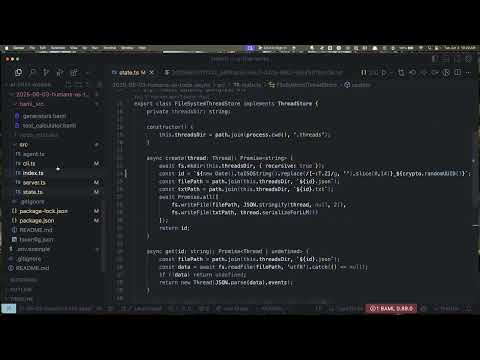
- https://github.com/BoundaryML/baml-examples/tree/main/extract-anything
- Related Session: Large Scale Classification
Key Takeaways
- Separate Extraction from Resolution: Extract "what string did the user type?" first, then resolve "which row in my DB?" separately
- Two-Stage Design for Scale: List-in-prompt fails beyond ~500 companies; use staged queues instead of bigger prompts
- Heuristics Before LLMs: Straight alias matching covers 80% of cases - save LLM calls for the hard 20%
- Type-Signature Mindset: Treat every LLM call as a pure function; swap implementations without rewriting call-sites
- Status-Driven Async Workflow: Use database status columns (proposed/ready/committed) to enable human-in-loop and future automation
- Start Expensive, Then Optimize: Ship with big models first, collect ground-truth data, then optimize when it hurts
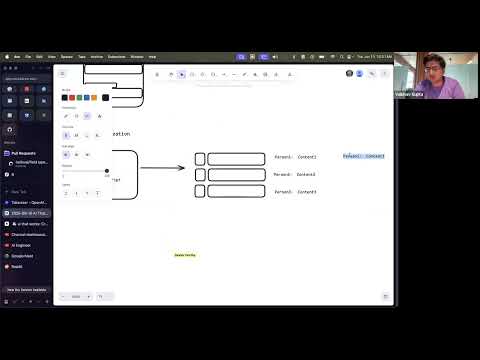
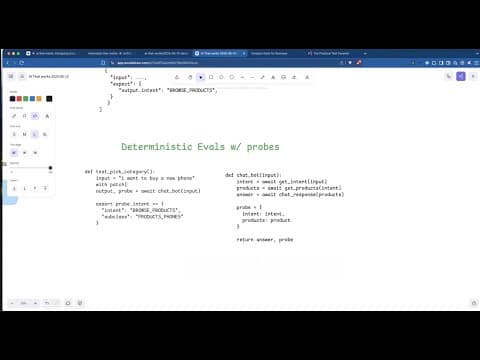
Whiteboards
Core Architecture
Pipeline Stages
- Extraction: Extract entities from raw text with small models (gpt-4o-mini, llama3:8b)
- Resolution: Match extracted entities to canonical database entries
- Enrichment: Queue unknown entities for web search and human review
Data Models
class Company(BaseModel):
    name_verbatim: str          # Raw text from input
    legal_name: str|None        # Canonical name if known
    company_type: Literal["well_known", "well_known_subsidiary", "startup"]

class Experience(BaseModel):
    company: Company
    title: str
Database Schema
companies(id, legal_name, aliases[], status, last_updated, updated_by)
experiences(id, resume_id, company_id, ...)

-- Statuses: proposed, ready, committed
Resolution Workflow
- Direct Match: Check if
legal_nameexists in company dictionary - Alias Matching: Try to match
name_verbatimagainst known aliases - Async Enrichment: Queue unknown companies for:
- LLM-powered web search
- Human review and approval
- Back-fill to original record
Running the Code
uv sync
uv run hello.py
uvx baml-cli test
Test Cases
The BAML configuration includes test cases for:
- Clear entities: "Microsoft", "Google" � direct resolution
- Ambiguous aliases: "GCP" � "Google Cloud Platform", "XBOX" � "Microsoft"
- Unknown startups: Queue for enrichment pipeline
Scaling Patterns
- Batch Processing: Run cheap heuristics first, fall back to LLM for failures
- Cost Optimization: Capture F1 metrics to know when to train custom small models
- Human Gates: Choose automation level based on risk (tax systems need approval, ATS can auto-commit)
Design Principles
- Complexity Budget: Break problems into extraction � resolution � enrichment layers
- Guardrails: Runtime type checks and retries prevent silent hallucinations
- Ground Truth Collection: Start with expensive accurate methods, then optimize with data
- Async by Design: Use SQS/queues for enrichment to avoid blocking main pipeline
Resources
- Session Recording
- BAML Documentation
- Discord Community
- Sign up for the next session on Luma