Unconference RECAP
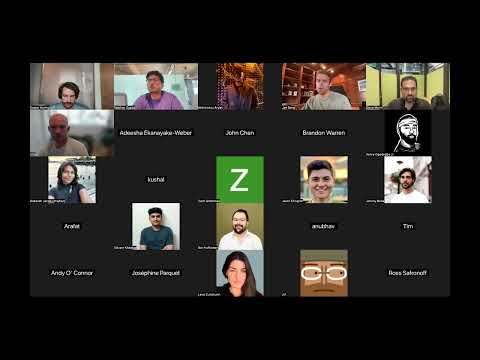
On Saturday, August 8th, we are hosting another unconference bringing together some of the brighest minds in AI. This week on the podcast we will be recapping it! What were some of the best takeaways? What did we learn? If you aren't attending the unconference, definitely tune into this episode to see what you missed. Meet the Speakers🧑💻 Meet Vaibhav Gupta, one of the creators of BAML and YC alum. He spent 10 years in AI performance optimization at places like Google, Microsoft, and D. E. Shaw. He loves diving deep and chatting about anything related to Gen AI and Computer Vision! Meet Dex Horthy, founder at HumanLayer and coiner of the term Context Engineering. He spent 10+ years building devops tools at Replicated, Sprout Social and JPL. DevOps junkie turned AI Engineer.
Project details
Open in GitHubOn Saturday, August 8th, we hosted another unconference bringing together some of the brightest minds in AI. This week on the podcast we recap it: the best takeaways, what we learned, and what you missed if you weren't there.
Links:
Episode Highlights
Key Takeaways
- Nobody at the unconference disagreed on one thing: unattended models write slop code. Every attendee is running a different process, and everyone changes that process every few months. The consensus wasn't a fix, it was "we're all still figuring stuff out."
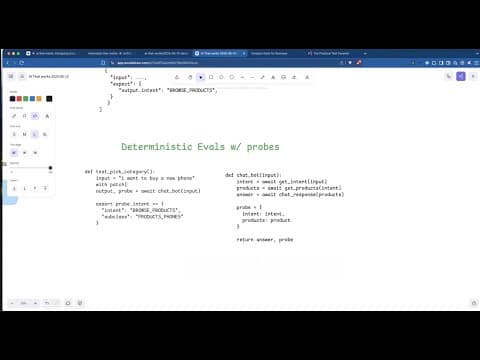
- Some teams built seventy deterministic linters instead of updating a prompt. Every time a Rust team catches an anti-pattern, they write a linter for it instead of adding a note to the agent's memory, so the next time the pattern shows up the agent gets a hard signal instead of a vibe. For cheaper models like DeepSeek V4 Flash, a plain list of a hundred "this should never happen" rules gets almost as far, just slower and pricier per check.
- Evals for skills, not just for output, was the idea that stuck with Vaibhav. Split a software factory into planning and implementing. Given a plan, a skill set, an environment, and tests, the implement loop is fairly evaluable: if the output is bad, it's the skill, the plan, or the environment, and you can isolate which. You can take a plan you already know worked, swap out one skill, and rerun it to check if the implementation still holds up.
- Almost everyone had independently converged on some form of adversarial review before a human ever sees the diff. Different names, same shape: run a loop that pokes holes in the output before it reaches a person, stacking the odds in the human's favor by the time they look. The word "adversarial" doesn't do the work by itself, it just catches the dumb stuff faster.
- Changing a model's reasoning effort mid-conversation invalidates your entire prompt cache, not just the reasoning block. Reasoning tokens sit near the front of the prompt, so flipping "low" to "high" partway through blows away everything cached after it, all the way back to the start.
- Where do you put your plan docs? Not in Git. The progression almost every team hits: check
plan.mdinto the repo, split it by feature, lose track of which branch a plan lives on, then discover GitHub can't comment on a document unless it's a diff. HumanLayer's fix was to git-ignore the plans and sync them to an external system instead, so multiple agents editing the same doc stay in sync without Git in the loop.
Resources
- Session Recording
- Discord Community
- Sign up for the next session on Luma
Whiteboards